Engineering the impossible

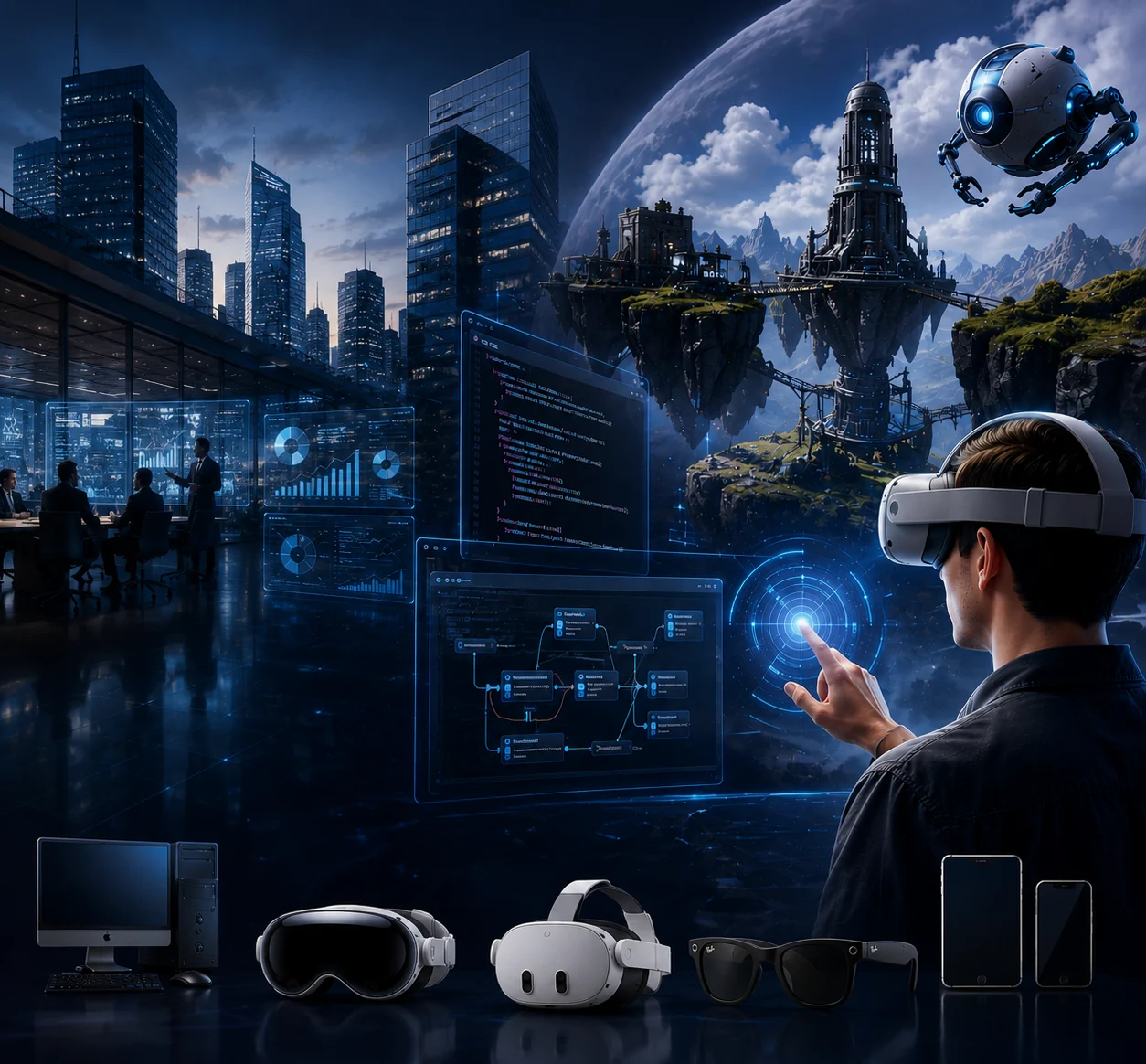
We build solid applications for PC, Mac, virtual, augmented and mixed reality, across platforms: Meta Quest, Vision Pro, HTC Vive and Android and iOS mobile devices.

Our developers work fluently in Unity and Unreal Engine to create smooth interactions and complex mechanics that respond to the user in real time.

  • Development in Unity (C#), Unreal Engine (C++/Blueprints) and Godot
  • WebXR integration
  • Multi-user applications
Desarrollo XR

Specialists in immersive technology

We cover the four key areas of immersive development to build solutions that are original and scalable

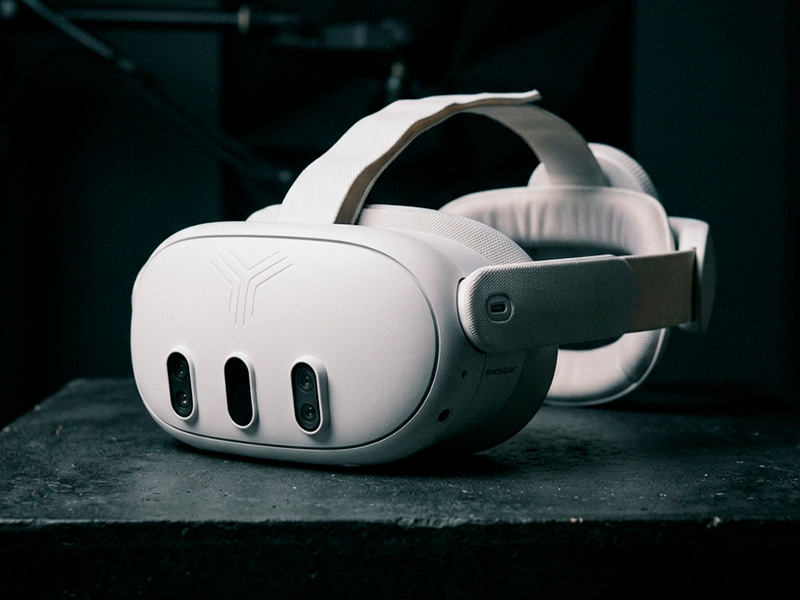
Meta Quest 3 VR headset

Virtual Reality

360° experiences for Quest, PSVR2 and Vision Pro. Simulation, training and gamification.

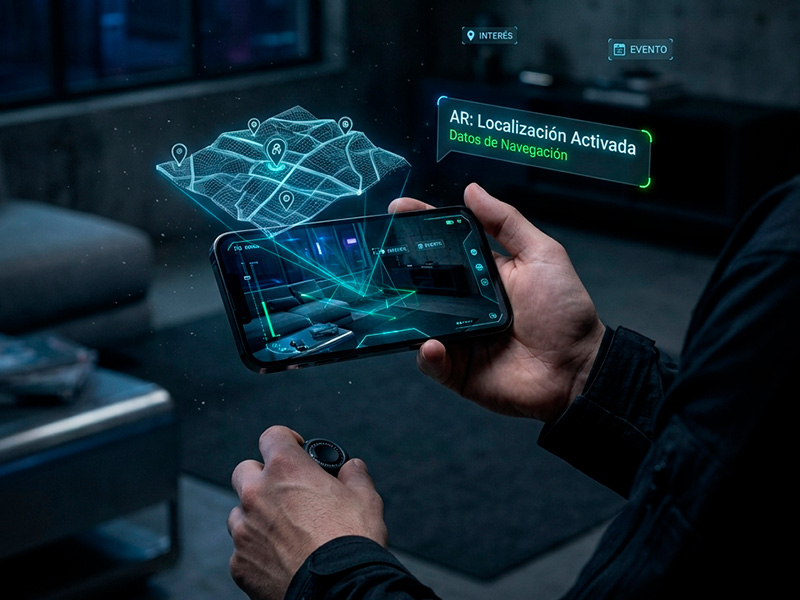
Augmented Reality

Augmented Reality

ARKit and ARCore mobile apps. 3D viewers, branded filters and augmented retail.

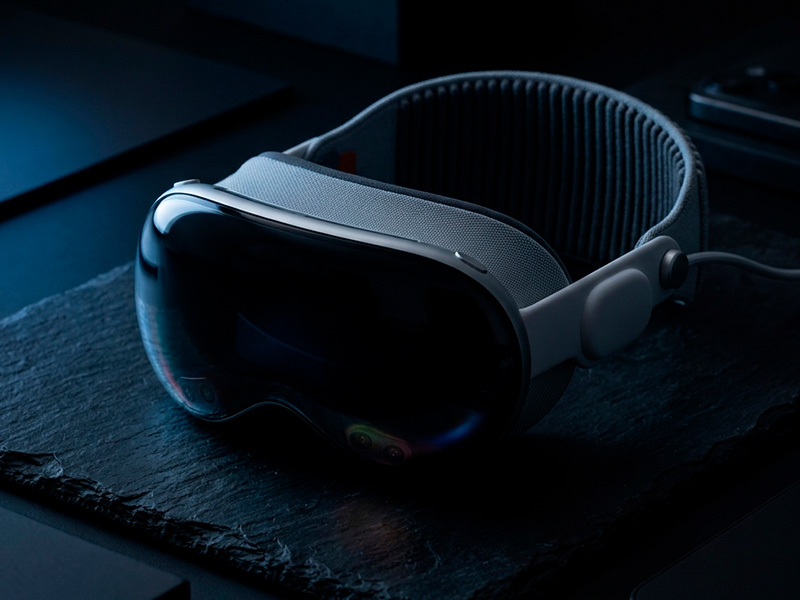
Mixed Reality

Mixed Reality

Spatial computing. Passthrough, holograms and spatial collaboration.

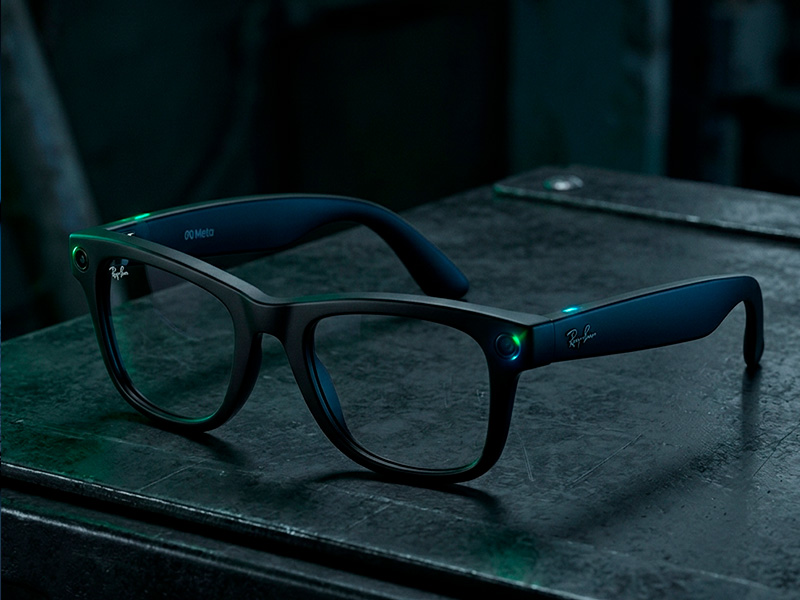
Smart Glasses

Gafas Inteligentes

Ray-Ban Meta, Nreal. Visual assistants and hands-free navigation.

How we work

A process proven across more than 150 projects, with close follow-up at every stage

1. Analysis and objectives

A discovery workshop covering objectives, KPIs and ROI. A complete functional brief.

2. Audience and target

User personas, customer journeys and early UX testing of the VR learning curve.

3. Budget and ROI

Scalable development from MVP to full product, matched to budget and technical needs.

4. Choosing the technology

Weighing up Unity, Unreal, WebXR, Meta Quest and Vision Pro on technical feasibility.

5. Business consultancy

Integration into real workflows to find process improvements through VR and AR.

6. Immersive UX and UI design

Spatial wireframes, ergonomics, natural interaction (hand tracking) and world-space UI.

7. Development and programming

Agile methodology. Code optimised to 90 fps, realistic physics and 3D spatial audio.

8. QA testing

Thorough multi-device testing for comfort, memory and functional bugs.

9. Handover and training

Deployment to the stores (Meta, Apple, Google), handover of assets and onboarding for your team.

10. Maintenance

SLA support, in-app analytics and ongoing operating system updates.

Types of project and development

Specialist immersive solutions that transform sectors with leading-edge technology

Virtual Reality (VR)

Immersive simulators for Meta Quest and PSVR2. Training without the risk.

Augmented Reality (AR)

iOS and Android apps with ARKit and ARCore, social filters and try-before-you-buy.

Mixed Reality (MR)

Spatial computing for Vision Pro and HoloLens. Holograms anchored in place.

Gafas Inteligentes

Hands-free software for wearables, Ray-Ban Meta and built-in AI assistants.

360º video and stills

Professional production of 8K stereoscopic content and interactive virtual tours.

Photogrammetry and 3D scanning

LiDAR, Matterport and Gaussian Splatting capture for digital twins.

The technology we use

The industry-leading tools for building immersive experiences

Unity

Unity

The leading engine for cross-platform VR and AR

Unreal Engine

Unreal Engine

High-fidelity, realistic graphics

Meta Quest SDK

Meta Quest SDK

Native development for Quest 2, 3 and Pro

Apple Vision Pro

Apple Vision Pro

Next-generation spatial computing

WebXR

WebXR

VR and AR experiences in the browser

Android XR

Android XR

Google’s immersive platform

Our specialist team

A multidisciplinary team that brings each project to life

Diseñadores Gráficos

They create the visual identity, the 2D and 3D interfaces, the iconography and the graphic assets that bring the experience to life.

3D designers

They model, texture and optimise every three-dimensional element of the immersive environment.

Unity and Unreal developers

They programme the logic, the interactions, the physics and the core systems of the immersive application.

Sound engineers

They design 3D soundscapes, spatial audio effects and immersive listening experiences.

QA Testers

They run thorough testing across multiple devices, find the bugs and sign off on quality.

Project Managers

They lead communication, coordinate the teams and make sure deliveries land on time and in full.

Frequently asked questions

Questions about development

Do you build apps for small businesses, or only for large companies?
Both. App development for a small business is approached differently: the scope is kept tight around the functionality that actually brings in business, and it is delivered in stages so the first version is in use early and grows with what you learn. A small, well-scoped project works; a small one that tries to do everything does not.
Can you build an Android app for a small business on a tight budget?
Yes, and that is usually where we start. An Android app is normally the shortest route because test builds are quicker to distribute than on iOS. If the app does not need platform-specific features, we build a single codebase and publish to both Android and iOS, which costs considerably less than building two apps.
And an iOS app for a small company?
That too. An iOS app comes with one extra requirement: an Apple developer account in the company’s name, with its annual fee, and App Store review adds a few days to the schedule. We build that into the timeline from the start so it does not catch anyone out at the end.
Can you build a desktop app for a small company?
Yes. A desktop app makes sense when the work is done sitting at a fixed workstation, when large files are involved, or when it has to run offline inside a warehouse or workshop. We deliver a Windows executable and, if needed, one for Mac.
Do you also build bespoke virtual reality applications?
It is what we do. Virtual and augmented reality development covers standalone headsets, mobile and desktop: procedure simulators, product configurators, training and brand experiences. See the projects we have delivered.